|
Rev. 07/19/24 |
|
|||||||||||||||
|
|
Glider Crews &
Operations |
|
||||||||||||||
|
History |
|
|||||||||||||||
|
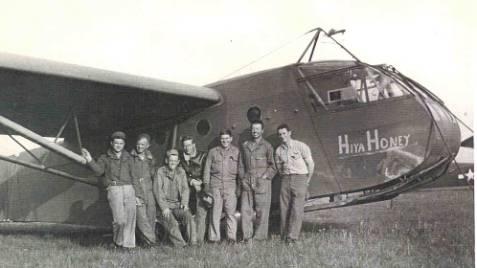
(Right) 34th TCS
Glider Engineering Officer and glider pilot Charlie Rex (on the right) and the
Glider Engineering section in front of a CG-4A Waco glider named ‘Hiya Honey’.. Note the tow line
attached at the top of the windscreen.
The nose of the Waco was hinged at the top and designed to be opened
by a pull-line attached to a jeep. Just
visible is the obliquely vertical seam between the nose and the fuselage. |
|
|
||||||||||||||
|
As
it exited after landing, the jeep pulled on the line which pulled the lever apparatus
seen overhead the cockpit. In
practical operations, however, the Waco would often roll forward after an
abrupt landing, crushing the nose sufficiently prevent its opening. As it was canvas covered, troops often cut
their way through the side, but the jeep would be lost.
|
|
|||||||||||||||
|
|
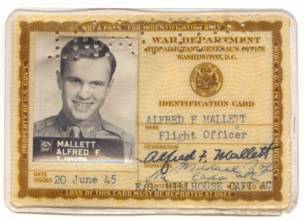
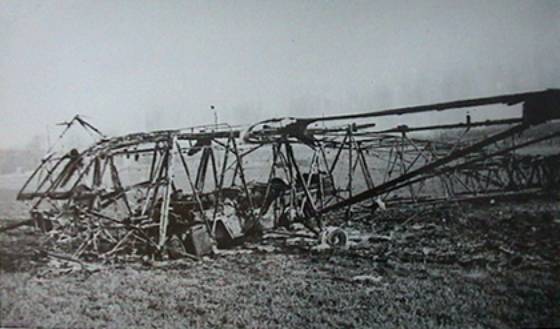
(Left) Identification card of Flight Officer
Alfred Mallett, glider pilot of the 309th
TCS. Submitted by FO Mallett’s son. (Below) Wreckage of FO Mallett’s glider after crash-landing during Operation Market Garden. The aircraft took hits from Flak and caught fire. FO Mallett was barely able to land the glider before the entire skin burned away. Note the jeep he was carrying still inside. Photo taken from official US Army project to photo-document as many crash sites as possible. |
|
||||||||||||||
|
(Above) Lt R. W. Best, glider pilot assigned to the 315th
TCG standing in front of 310th TCS c-47s There was not separate “glider” squadron --
gliders were assigned to the various squadrons in the Group. |
Recollections
from Flight Officer David Trexler, Glider Pilot,
34th Troop Carrier Squadron I always described the treatment of us glider
pilots in our squadron as benign neglect. They didn't give us any jobs except
once when we were in France. We built some paths with rocks and stuff In
England, for heaven's sakes, except for those flights in C-47s occasionally, we didn't do a damn thing. We couldn't be
Officer of the Day because we weren't commissioned. We could do damned near
anything we wanted. One day, for heaven’s sake, I remember I did 60 straight
liberty runs to Leicester. Unless you requested to be put on as a co-pilot,
they would use all power pilots. The power pilots that I flew with, they were
fully accepting of us as pilots and even let us do landings from the right
seat and stuff like that. A lot of those later Troop Carrier units formed
in the States went overseas together with their glider pilots. They were
absolutely and fully part of their respective squadrons as far as I can
determine. That seems to be the case with all those people in the
"400" groups, where glider pilots were part and parcel of the units
when they were raised. I had a lot of friends in the glider program, and they
were absolutely part of their unit. I think particularly in the 315th the
glider pilots were replacements. I arrived in September of 1944, and the
315th had been overseas damn near two years. We glider pilots were sort of
orphans, probably due to the fact that the 315th never towed gliders in
combat. |
|
||||||||||||||
|
|
|
|||||||||||||||
|
|
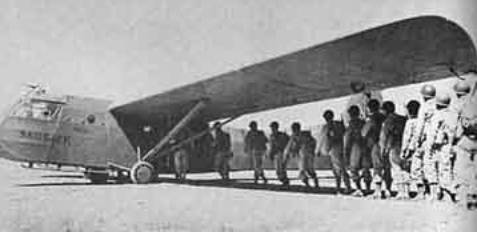
(Left) Glider troops boarding a CG-4A glider. Glider unit and troop unit not identified. |
|
||||||||||||||
|
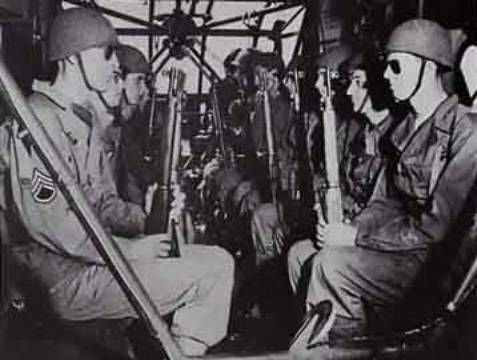
(Right) Troops seated inside a CG-4A Waco glider, looking
forward. Photo was taken for training
purposes. (Stock photo – not 315th TCG) |
|
|
||||||||||||||
|
|
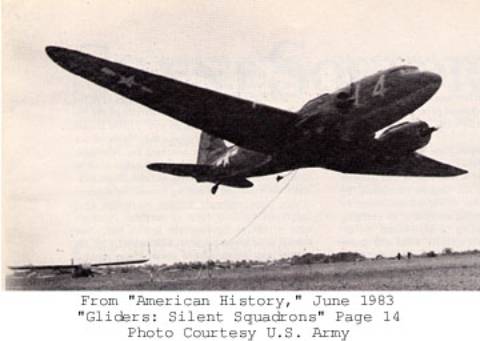
(Left) A c-47
of the 91st TCS of the 439th TCG (note the L4 on the
nose) ‘snatching’ CG-4A glider from the ground. The glider’s tow line was suspended from two
poles flanking the glider. The C-47
mounted with a hook beneath, flew slightly above and between the poles and
grabbed the tow line. A dynamic
braking drum inside the C-47 allowed the glider to accelerate smoothly,
though quickly, to takeoff speed. |
|
||||||||||||||
|
|
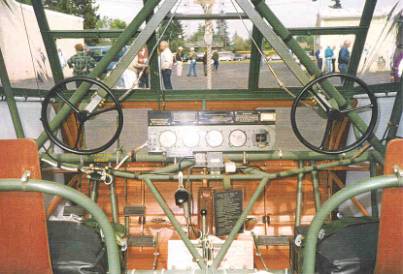
(Left) Cockpit of the
CG-4, Waco glider |
|
||||||||||||||
|
|
|
|||||||||||||||
|
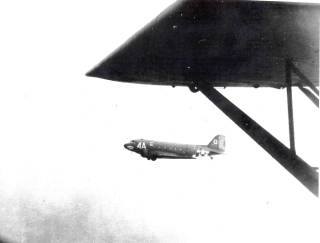
(Right) 310th’s C-47 ‘Umptey-pooh’,
uniquely marked with ‘Tiger Jaws’, as seen from a CG-4A Waco glider in tow
during a glider training mission.
Barely visible (in the original photo) is the tow line extending
behind ‘Umptey-pooh’. C-47s could tow two Waco gliders
simultaneously and could also ‘snatch’ a glider from the ground. Although the 315th trained in towing and snatching, the group
never towed gliders in combat. |
|
|
||||||||||||||
|
|
|
|||||||||||||||
|
|
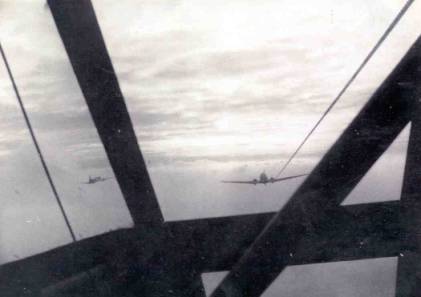
(Left) View from the cockpit of a CG-4A Waco
glider. Note only one glider in tow
behind the C-47. C-47s could, and
frequently did, tow two Waco gliders. |
|
||||||||||||||
|
|
|
|||||||||||||||
|
|
|
|||||||||||||||
|
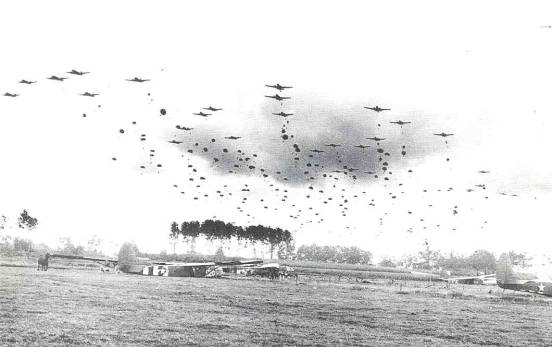
(Above) A serial of
C-47s of the 315th TCG dropping 41 sticks of the 1st Polish Airborne Brigade
into Graves, Holland, on |
|
|
||||||||||||||
|
(Above) CG-4 Waco gliders being prepared
for towing by the 310th TCS. Note the invasion stripes on the tail of the glider on the far
left indicating this was a training mission after the Normandy
invasion on June 5/6, 1944 |
|
|||||||||||||||
|
|
|
|||||||||||||||
|
|
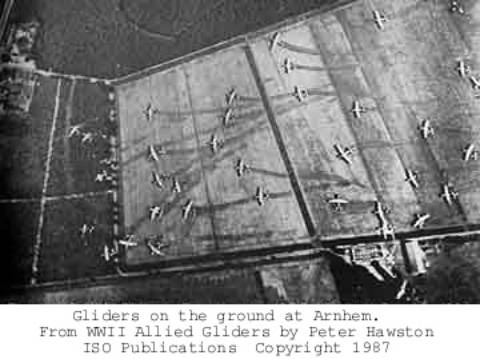
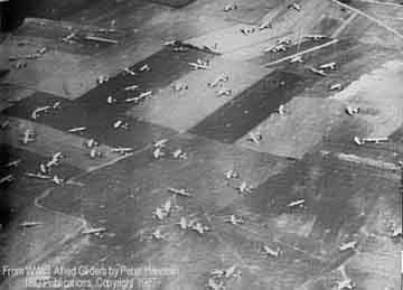
(Left) As the caption states, gliders on the
ground at Arnhem, Holland, September, 1944, during Operation Market
Garden. Judging by the width of the
skid marks and the short fuselage, they appear to be mostly Wacos. Note the
relative shortness of the skid marks, indicating a ground run of less than 5
seconds duration. In an interview, FO
Stone of the 315th TCG described the best technique to land a
glider was to stall it just above the ground and ‘drop’ the aircraft onto the
ground. This technique reduced ground
run, which was usually more dangerous over rough terrain than the ‘drop’ from
a few feet. |
|
||||||||||||||
|
(Right) Aerial view of glider landing, mostly Horsas. Landing
zone and date not identified. |
|
|
||||||||||||||
|
(Above) British Horsa glider allocated to the 315th TCG. The 315th towed
both Waco CG-4s and Horsas carrying American and
British in training but were never tasked to tow them in combat. |
|
|||||||||||||||
|
|
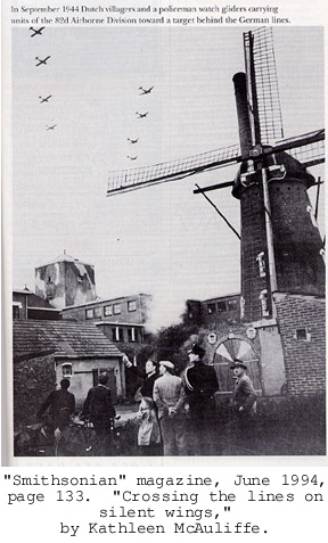
(Left) The caption at the top of the photo reads “In
September 1944, Ductch villagers and a pliceman watch gliders carrying units of the 82nd
Airborne Division toward a target behind the German lines.” The unit of C-47s towing the gliders is not
identified, and probably not the 315th
TCG as they never towed gliders in a combat operation. |
|
||||||||||||||
|
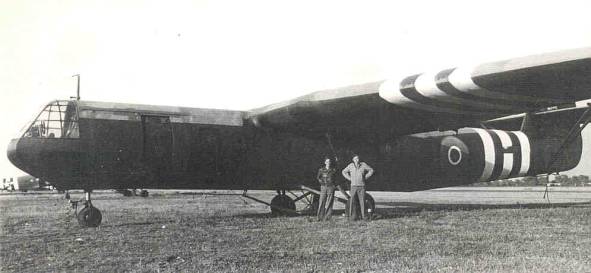
(Above) Walter
'Pappy' Winans and Pat McMarrow
standing next to British Horsa. Note invasion stripes which were painted on
Allied aircraft for Normandy and after.
The Horsa was towed with a V line attached
to each wing. After Normandy, the Horsa’s were modified with explosive bolts around the
empennage (tail section) which blew off the tail to permit rapid egress of
the troops after landing. 315th
Flight Officer and glider pilot Arthur ‘Stoney’ Stone reported seeing a Horsa in-tow with the empennage
missing while flying as a C-47 copilot on a mission into Holland during
Operation Market Garden. The explosive
bolts had apparently discharged in-flight.
The outcome for the unfortunate glider and its occupants is not known. |
|
|||||||||||||||
|
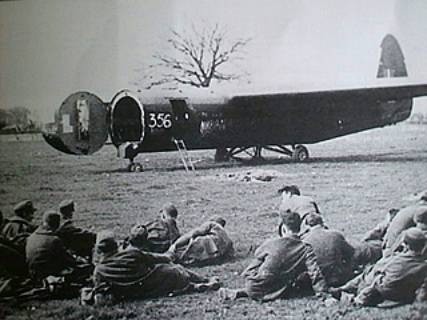
(Above) A British Horsa
glider after landing. Troops in
foreground not identified. |
Among
the companies who built Hora gliders was the Harris Lebus
company , founded by Lewis Lebus,
a Breslau-born Jew who came to England in 1840 and started building
furniture. By 1899 Lebus employed 1000 operatives and 45 managers,
and was the largest furniture company in England. The company reached its zenith just before
World War II, when it employed about 8,000 workers. In 1940, the Harris Lebus company switched to armaments production, their
specialty building Horsa Transport gliders for the
Royal Air Force (RAF). Its first military use was the British invasion of
Sicily on |
|
||||||||||||||
|
|
|
|||||||||||||||
|
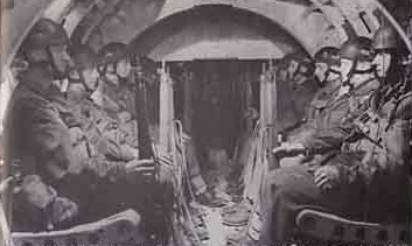
(Right) Inside a British Horsa
glider, looking forward. Note the bottom
of the flight deck (cockpit) appearing just above the heads of the last
glider troops. Photo was taken for
training purposes. |
|
|
||||||||||||||
|
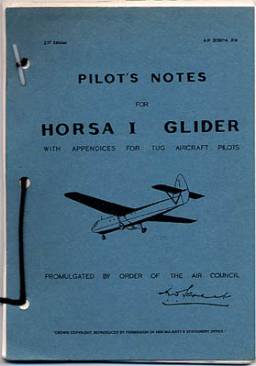
(Below left) The
operations manual ‘Pilot Notes’ for the British Horsa
glider. (Below right) A page from the Pilot’s Notes handbook depicted
the instrument panel and controls of the Horsa. |
|
|||||||||||||||
|
|
|
|
||||||||||||||
|
|
|
|||||||||||||||
|
|
|
|||||||||||||||
|
Veteran Members |
|
|||||||||||||||
|
|
||||||||||||||||
|
Current Members (list forthcoming) |
|
|||||||||||||||